
Breeding
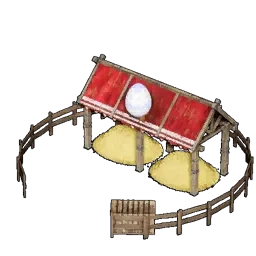
Breeding pairs a male and a female Pal to produce an egg. The two Pals live in a Breeding Farm and need Cake to get started. The egg then goes into an incubator and hatches into a new Pal. The child takes its species from the two parents and can inherit their skills.
Breeding answers three questions. It gets hold of Pals that are hard to find in the wild. It moves rare passive skills from one Pal onto another. It also builds stronger Pals with higher hidden stats.
The system opens up mid-game. The Breeding Farm is an Ancient Technology entry at level 19. A first pair needs little more than a farm, a few Cakes and an incubator. Early breeding is a cheap way to fill Paldeck entries and hatch a useful worker or mount.
Late breeding is about perfect Pals. The goal is the right four passive skills on a Pal with high stats. The better cakes and the Ancient Hatchery all serve that goal.
To get started, build a Breeding Farm and an Egg Incubator. Set up a Ranch for milk, eggs and honey. Bake Cake at a Cooking Pot, then assign a pair.
Breeding Farm
The Breeding Farm is a pen for one male Pal and one female Pal. It costs 2 Ancient Technology Points to unlock. Give it room, because the farm takes up a lot of space.
Assign the pair by picking up each Pal and throwing it at the farm. A Monitoring Stand can make the same assignment. Both Pals must be assigned to the base first.
Put a Cake in the chest at the front of the farm. The two Pals then begin to breed. A progress bar fills, and an egg appears when it completes. The cycle repeats while Cake remains in the chest.
Pals in the farm keep their Sanity intact while breeding. They still leave to eat and sleep.
Two things make a farm faster. A parent with the Philanthropist passive skill cuts the time for each egg. A Braloha assigned to the base speeds up egg production for every farm there.
The Ancient Hatchery is the end-game replacement. It combines the farm and a large electric incubator into one building. It also raises the chance of inheriting rare passive skills.
The pictures below show what the text above names.
| Name | Image |
|---|---|
| Monitoring Stand | 
|
| Braloha | 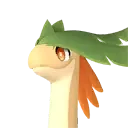
|
| Ancient Hatchery | 
|
| Egg Incubator | 
|
Cake
Cake is the fuel for breeding, and each egg uses it up. The plain recipe takes Flour, Red Berries, Milk, Egg and Honey. A Cooking Pot can bake it, and a Pal with Kindling bakes it faster.
A steady supply needs a small farm. A Wheat Plantation and a Mill provide the Flour. A Berry Plantation provides the Red Berries. A Ranch with Beegarde, Chikipi and Mozzarina covers the Honey, Egg and Milk. A Cooler Box keeps the ingredients fresh until baking starts.
Cake spoils like other food in a normal chest. Stored in the chest at the farm, Cake stays fresh.
Four other cakes add a bonus on top of the egg:
Mushroom Cake helps the talents of the child grow more easily.
Vegetable Cake makes the parents lay two eggs at once.
Extravagant Vegetable Cake raises the chance of a Mutated Egg and also helps talents grow.
Special Cake makes the child more likely to inherit several passive skills. It needs an Ancient Kitchen to bake.
Plain Cake is enough for early breeding. Save Vegetable Cake for mass production and Special Cake for perfect Pals.
Each picture below matches a name from the text above.
| Name | Image |
|---|---|
| Cooking Pot | 
|
| Wheat Plantation | 
|
| Mill | 
|
| Berry Plantation | 
|
Breeding Power
Every Pal species has a hidden number called Breeding Power. A lower number marks a rarer or stronger Pal.
The child is usually found by a simple average. The game adds the Breeding Power of both parents and halves it. The species with the closest Breeding Power becomes the child.
The child therefore lands between its two parents in rarity. A rare parent and a common parent produce something in the middle.
One rare Pal can still lift a whole line. Breed the rare Pal with its own child. Each new child comes closer to the rare parent's strength. Repeat this a few times to reach Pals close to that level.
Gender
Each pair needs one male and one female. Swapping the genders of the two species gives the same child in almost every case.
Katress and Wixen are the exception. A female Wixen with a male Katress gives Wixen Noct. A female Katress with a male Wixen gives Katress Ignis.
The Pal Reverser changes a Pal's gender at the Pal Surgery Table. Use it when two good parents happen to be the same gender.
The pictures below show what the text above names.
| Name | Image |
|---|---|
| Katress | 
|
| Wixen | 
|
| Wixen Noct | 
|
| Katress Ignis | 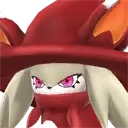
|
Unique Combinations
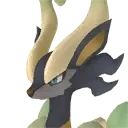
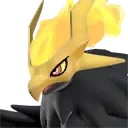
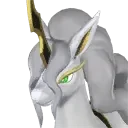
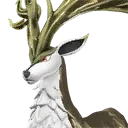
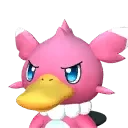
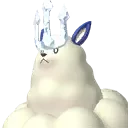
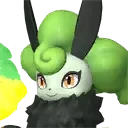
Some pairs ignore Breeding Power and always give a fixed child. Most subspecies come from pairs like this. Mossanda and Grizzbolt, for example, give Mossanda Lux.
Some Legendary Pals breed only with their own species. Two Jetragon are the only pair that makes a Jetragon.
Each pair below always hatches the Pal in the first column.








































































Passive Skills
A Pal holds up to four passive skills. The child picks from the combined skills of both parents. It inherits a random number of them, from zero up to four.
Any empty slot can fill with a random passive skill. Rare skills such as Lucky and Legend can pass down this way. Breeding is the main route to those two.
A good pair carries only the wanted skills. Extra skills on a parent crowd the pool and lower the odds. The Pal Surgery Table removes unwanted skills before breeding starts.
Chain breeding builds a perfect set over several generations. Breed a parent that has the wanted skill. Keep the child that inherits it, then breed that child with the next parent. Inheritance is a roll every time, so expect some failed eggs.
Children can also learn the Active Skills of their parents. They can inherit a parent's stat potential too. Ability Glasses show those hidden stats on a scale of 0 to 100.
Each picture below matches a name from the text above.
| Name | Image |
|---|---|
| Pal Surgery Table | 
|
| Ability Glasses | 
|
Eggs
Eggs hatch in an Egg Incubator. Each egg matches the main element of the Pal inside. Eggs come in regular, large and huge sizes. Huge eggs take the longest to hatch.
Temperature changes the speed. Each egg has a comfortable range, and the incubator shows when it is too hot or too cold. Place a Campfire, Heater or Cooler nearby to fix it. Electric incubators hatch eggs faster, and large ones hold several at once.
A hatched Pal joins the party if a slot is open. Otherwise it goes to the Palbox.
Two rare outcomes are worth watching for. A small share of bred eggs hatch as an Alpha Pal, and those eggs are one size larger. A rare Mutated Egg hatches into a different Pal, always with a passive skill exclusive to mutations.