
World
| World | |
|---|---|
| Home base | The estate |
| Expanding it | Faster health regeneration |
| Screens inside | Equip character, medal collection, altar |
| Altar rate | 1 gold for 10 health |
| Free alternative | Resting at the estate |
In KnightFight, the world a knight lives in centres on the estate. It is the character's home base, and expanding it makes health come back faster between fights. The estate also holds three screens. Equip character is where gear is put on and where the combat potential figure is shown. The medal collection keeps every medal won on the battlefield, with a display shelf for other players to see. The third is the altar.
The altar is the paid alternative to resting. One gold buys back 10 health points, which makes it a quick top-up rather than a full recovery once the health bar has grown with the levels. New players are advised to keep a reserve of up to 10 gold for it and to spend it when health falls below 25. Resting costs nothing and is usually enough, because every fight already buys an hour of protection that missions or tavern work can fill. Health counts most at the bottom of the bar, since a knight whose health drops below 10 in a fight flees and loses.
Estate

The estate is where a knight lives and recovers between fights, and one mechanic belongs to the building itself: the further it has been expanded, the faster health regenerates. Beyond that it works as a hub. The screen for wearing equipment is here, so is the shelf that shows medals to other players, and the altar stands inside it for a knight who would rather pay for health than wait for it.

Expansion
Expanding the estate speeds up health regeneration, so a knight spends less time waiting to be fit for the next fight. The game also sells expansion as a way to show off a knight's power and influence.
Equip character
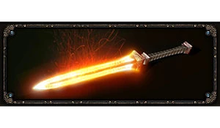
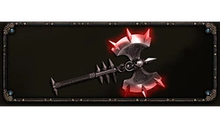
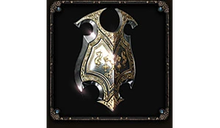
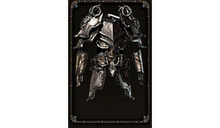
Weapons, armour, shields, rings and amulets are put on and taken off on this screen. Gear bought from the merchant is equipped here, whether it is a better blade or a ring that adds strength. Soul stones are the exception: they go into the weapon at the blacksmith instead.
The combat potential figure is shown on the same screen. It depends on the gear worn, the level and the skill distribution, so the effect of a change of kit can be read off straight away rather than guessed at.
The medal shelf
Medals are won on the battlefield and go into a collection kept at the estate. The display shelf is the public part of it: the owner chooses which medals stand there for other players to see. Medals come in 5 types. The first type is awarded for reaching a threshold in an action, and only one medal exists per value. The second marks the best or worst result in a single battle session, measured against every finished session of every player. The third goes to the top 10 of a season and is handed out when the season ends. It comes in 4 graded versions, each showing a place.
The fourth type covers special awards, such as a Christmas event medal. The fifth type belongs to non-player characters only. These are joke awards with flavour text, and no player can earn them. What each award is and how it is earned is covered under achievements.
Altar

The altar stands inside the estate and sells health back for gold. 1 gold restores 10 health points and 2 restore 20. In the game it is framed as a prayer: a knight donates a few coins, asks a god for healing, and the prayer is answered.
The health bar it tops up keeps growing. Health starts at 100, gains 40 at level 2 and then a flat 70 at every level after that, so a level 50 knight has 3,500. Against a bar that size, 10 points per gold is a quick top-up rather than a full recovery. New players are advised to keep up to 10 gold in hand and spend it at the altar if their health falls below 25.
Healing or resting
Resting is the free alternative, and the estate sets its pace: the further the estate is expanded, the faster health comes back. Time is rarely the scarce resource anyway. Any fight, won or lost, buys 60 minutes of hour protection, and the usual routine fills that hour with missions or tavern work.
The altar earns its place when waiting is not an option: a fight is needed now, or a beating has left too little health for the next one to be worth starting. That is what the small reserve is for, and it is why the advice ties it to a health threshold rather than a schedule.
The threshold that counts in a fight is 10. A knight whose health drops below 10 flees automatically, and fleeing counts as a loss. The winner then takes 5 to 10 per cent of the loser's gold.
The battlefield has no use for the altar. A character there starts every battle at full health, whatever has happened at home, so altar gold is only ever spent on the home server.
Equipment Categories
KnightFight Categories
| Section | What It Covers |
|---|---|
| Equipment | Weapons, armour, jewellery and soul stones: what is sold, what it costs, and what it does to a knight's numbers. |
| Attributes | The five trained attributes, the alignment axis they sit alongside, and the combat potential figure that summarises them. |
| Progression | Levels, experience, and the skill points that decide which equipment the merchant will sell. |
| Combat | Attacking, being attacked, the hour of protection between the two, and the separate international battle server. |
| Economy | The two currencies, the three places that take them, and the two ways of earning them. |
| Guilds | Founding a guild, the castle that sets its size, and the seven-day wars it can declare. |
| World | The estate a knight lives in and the altar inside it. |
| Achievements | Medals, and the highscore tables they are won from. |
| Calculator | Weapon damage, armour absorption, training costs and the experience each level asks for, on the game's own formulas. |