
Economy
| Economy | |
|---|---|
| Earned currency | Gold |
| Paid currency | Gems, also called MoonCoins |
| Gem to gold rate | 2 gold per gem |
| Shops | Merchant and bazaar |
| Merchant refund | Half the price paid |
The KnightFight economy turns on two currencies. Gold is earned by playing: tavern jobs, missions, won fights, the battlefield and a bonus at every level. It pays for training attributes and for most equipment, and it is what an attacker carries off after a won fight. Gems, also sold as MoonCoins, are bought with money or picked up now and then. They pay for premium time, the tavern package, faster missions and part of the equipment range. One gem converts into 2 gold.
Gold is spent in a few fixed places. The merchant sells almost every item and buys it back at half price. The bazaar carries goods the merchant never stocks, on a stall that refreshes every 24 hours. The blacksmith sharpens weapons and sets soul stones into them. When the purse is empty, the tavern pays a wage for real time spent working. The game has no bank, so loose gold is always at risk, and accounts that lose a lot of it become known as gold donkeys.
Currency

KnightFight runs on two currencies that do very different jobs. Gold is earned by playing and pays for almost everything a knight does. Gems are bought with money, convert into gold at a fixed rate, and pay for the extras. A third name, MoonCoins, turns up throughout the game and the portal around it; it is the same money as gems, seen from the portal's side.
In practice gold is what a knight spends on training and gear, and what attackers steal. Gems buy premium days, faster missions, a better tavern wage and part of the equipment range.
Gold
 Gold is the currency a knight works for. A new account starts with 70 gold. The usual opening spends some of it training the attributes up to 6 and keeps around 15 in hand before the first fight.
It comes in from most of what the game offers: tavern jobs, missions, winning a fight, premium, the referral link, the battlefield, and a bonus at every level worth (new level - 1) x 10. Gems and MoonCoins convert into it as well.
It goes out just as broadly. Training an attribute costs gold on a curve that climbs steeply, equipment is bought with it at the merchant and the bazaar, the altar sells health back at 1 gold for 10 points, declaring a guild war costs 1,000 gold for every 10 members, and a guild castle grows on gold its members donate.
Gold is also what an attacker takes: a won fight carries off 5 to 10 per cent of the loser's gold. Gold from levelling comes in less actively than the rest. A level-up is a side effect of missions and of fights against equal or stronger knights, so its gold arrives without being chased.
Battlefield gold follows its own rules. It depends on the opponent's combat potential, not on how much gold that opponent carries. A clearly weaker opponent may pay 0 to 16 gold, and a stronger one 45 to 60. At the end of the session the gold moves to the home server at a rate of 1 to 1.
That is why players bunker it rather than sit on it, and why an account that regularly loses more than 100 gold a fight ends up on someone's list of gold donkeys.
Gems
 Gems, Edelsteine in German, are the paid currency. They replaced the old premium tickets, which each bought a fixed block of premium time. Now gems are bought instead, and the player decides what to spend them on.
Gems have four fixed conversions:
- Premium time, at 175 gems for 10 days or 500 for 30.
- The tavern package at the same rates, which adds 30 per cent to the tavern wage.
- Gold, at a flat 2 gold per gem.
- A mission speed-up, for 10.
Gems also buy equipment outright. Every equipment class includes items priced in gems rather than gold, and among soul stones the whole dragon line is sold for gems.
Gems do not have to be bought. A tavern job occasionally pays 2 or 3, with no way to tell from the job text which one will, and every 25th level pays a bonus of 10 times the level reached: 250 gems at level 25, 500 at level 50, and so on.
Some payment methods add a small bonus to the gems bought. Gems also pay for a few things outside the shop. Changing a character's sex costs 50 gems or MoonCoins. The longer battlefield sessions cost 150 or 250 gems to enter. The royal prize draw at the end of a battlefield session can pay out gems for the home server.
MoonCoins
 MoonCoins are the same money one step further out. Gems belong to KnightFight; MoonCoins belong to moonID, the account portal the publisher runs for all of its games, so a MoonCoin can be spent in any of them. Inside KnightFight the two names are used interchangeably, and every gem price is also a MoonCoin price.
When something is bought in the game, the in-game balance is spent first and MoonCoins only make up the remainder.
Two ways of getting MoonCoins involve no payment. Recruiting a friend who registers on the portal pays 1 per cent of everything that friend spends, credited in MoonCoins, and the portal's offerwall pays MoonCoins for completing tasks such as playing games or taking part in surveys.
The publisher is CRATR.games GmbH, formerly RedMoon Studios. The game is at moonid.net, with the English-language site at knightfight.co.uk, and the portal itself at moonid.net.
Merchant

The merchant is the shop that carries almost everything a knight can wear or wield. One-handed and two-handed weapons, shields, armour, rings, amulets and soul stones are all sold over the same counter.
Selling happens on the same screen, through the button at the bottom of the inventory panel. The merchant pays back half of what an item cost, which still beats leaving the gold in the purse for an attacker to take.
That refund makes the shop a place to park gold. A knight saving for an expensive piece can buy small, cheap items as the gold comes in and sell them all at once when the target is affordable. Half the value is lost, but attackers get none of it.
The profile settings decide how many items the merchant shows on one page.
What the counter asks for
Four conditions have to be met before the merchant will sell an item: the level it asks for, enough money to pay for it, a suitable alignment, and the right skill. Armour and shields are checked against armour skill, and weapons against the weapon skill for whichever hand the knight has committed to.
Which of the two progression checks applies depends on the class. Weapons, shields and armour ask for a skill point total, while rings, amulets and soul stones ask only for a level.
That split turns a shopping list into a training plan. Levels arrive on their own, so jewellery and soul stones unlock in time without any decision. A skill point spent on one weapon hand is a point that is not spent on armour, and taking it back costs gold on a rising scale.
Gold or gems
About a quarter of the merchant's stock is priced in gems rather than gold. Gold prices run from 50 for the cheapest armour up to 218,000 for the most expensive two-hander, and gem prices from 50 up to 4,500. Each item carries a single price in one of the two currencies. Among weapons with the same requirement, the gem-priced one almost always hits harder.
What the merchant never carries
About a third of the weapons are bazaar goods and never appear at this counter at any price. The same is true of one whole element of soul stone. Five of the six elements are stocked here, but lightning is not, so any lightning stone a knight owns came from the bazaar.
Bazaar

The bazaar is the second place to trade equipment and the only place to find some of it. Neither shop is reliably the cheaper one: a bazaar price can beat the merchant's or fall well short of it, and the same goes for the offers made when selling.
What really sets it apart is the stock. A good share of the one-handed and two-handed weapons are bazaar goods, and so is every lightning soul stone. The blacksmith fits those stones like any other, but no other shop sells them, so a lightning build depends on what this stall happens to be showing.
Stock
Stock is drawn per player, so two knights need not see the same goods, and another player's stall says nothing about what anyone else will be offered. The stand shows 5 to 7 items and refreshes every 24 hours, or sooner once everything on it has been bought.
From level 10 the trader will take a bribe to bring in new goods early.
Bazaar weapons are priced in gold on some rows and in gems on others, so gold alone will not clear the stall. The lightning stones are all priced in gold. The first, at level 7, costs 400 gold, and the strongest, at level 315, costs 32,000. The most expensive bazaar weapons are heavy two-handers: the Ornamental Blade of the Barcids costs 187,000 gold and the Cleaving Weapon of the Blue costs 185,000.
Selling by quote
Selling works by quote rather than at a fixed price. A knight asks what the trader will pay for one item in the inventory, and that quote holds for 6 hours. The item can be sold at once, or kept and offered again once the 6 hours are up. Either way that single item occupies the stall, and nothing else can be sold at the bazaar until the window closes.
There is one way out early: selling the quoted item to the merchant instead frees the bazaar for the next item straight away. A low quote on a valuable piece therefore costs more than the figure suggests, because turning it down locks the stall for 6 hours.
The bazaar also helps a knight keep gold away from attackers. Spare gold turned into items can be sold again later, and a bazaar quote can come in higher than the merchant's 50 per cent refund. It is also the place to get rid of equipment that is no longer needed.
The shell game
A hustler with three hats also works the bazaar. The stake is anything from 10 to 100 gold; a correct pick pays back twice the stake, and a wrong one pays nothing.
Blacksmith

The blacksmith is opened from the button next to the knight's weapon on the overview screen, and it is the one place where a weapon is improved rather than replaced. It does three jobs: it fits soul stones into the weapon's sockets, it sharpens the blade, and it engraves a name on it for premium players.
All three jobs work on the weapon alone. The soul stones are what give it magic damage, and only an opponent's amulets protect against that.
Sockets and soul stones
The number of sockets is fixed by the weapon, anywhere from none to three, and three is the norm: the large majority of one-handed and two-handed weapons carry the full set, and only a handful carry none. The stones come from the merchant, except the lightning ones, which are sold only at the bazaar, and they are gated by level rather than by weapon skill.
A fitted stone can be swapped for another, but the stone coming out is destroyed rather than returned to the inventory. A cheap stone fitted early is therefore gone for good the moment it is replaced.
Fitting a stone takes 3 steps. The knight opens the blacksmith from the weapon and scrolls down to the inventory. A click on Insert next to the chosen soul stone opens a window titled Insert new soul stone. Confirming with Insert fits the stone, while the other button cancels. A replacement works the same way, except that the old stone to be replaced has to be picked first.
Elemental Damage
Soul stones come in 6 elements: ice, fire, lightning, shadow, holy and dragon. Each stone carries one element at one value, from 1 to 19. The magic damage is added on top of the weapon's base damage range.
The defender's amulets cancel it one element at a time. For each element, the attacker's value minus the defender's resistance is added, and the result never drops below zero. Ice cancels only ice, and fire only fire. A weapon with 2 points of ice against an amulet with 1 point of ice resistance adds 1 point, not 2. The bonus from all 6 elements is then added together.
Shadow and holy stones also carry an alignment figure. Shadow stones need an evil standing and holy stones a good one.
Sharpening
A weapon can be sharpened 3 times. Each pass adds 1 point to the maximum damage and leaves the minimum alone, so the range widens rather than shifts. A 27-30 weapon becomes 27-31 after the first pass, 27-32 after the second and 27-33 after the third. Every pass costs more than the one before.
| Sharpening | Cost | Maximum Damage Gained |
|---|---|---|
| 1 | 50   |
+1 |
| 2 | 150 |
+1 |
| 3 | 300 |
+1 |
All three together cost 500 gems for 3 points of top-end damage, a flat price for a benefit that is anything but flat. On that 27-30 weapon it lifts the ceiling by a tenth. On the heaviest two-handers, which reach 181-211, the same 500 gems barely registers. Sharpening pays best on a weapon bought early and kept for a while.
Weapon naming
Premium accounts can replace a weapon's shop name with one of their own, purely so that it stands out from the crowd. The 3-day starter premium includes naming as well.
Tavern

The tavern is where a knight with no gold left goes to earn some. Work comes as a single job of a chosen length, anywhere from 1 hour to 12.
That makes it the income of last resort, and one that is always open, at the cost of real time. Once a job is running the knight is tied to it for its full length. The only way out is to cancel within the first 10 minutes, and that pays nothing at all. While cancelling is still possible, the tavern shows how many minutes are left to change course, and a button cancels the current job.
Taking a job
Jobs are posted on a notice board, and each one has a duration and a side. Choosing the hours and the side and pressing accept starts the shift. Red jobs pull alignment towards evil and light ones towards good, so every shift is a fresh choice of side.
A job of the wanted length is not always there. The board works like a shared quest pool, and once other players have taken the jobs for a given number of hours, those jobs are gone. Refreshing the page a few times may bring one back, or a different length will do just as well.
What the work pays
Every level gained raises the gold offered for jobs. A premium account earns 10% above the advertised wage, and a tavern package bought with gems raises it by 30%. The package costs the same as premium time, and it can be paid in gems or MoonCoins. Gems themselves turn up now and then as a bonus on top of the wage, 2 or 3 at a time. A note in the game announces them. Finding them takes luck, and the wording of a job on the board gives no hint of which ones will pay out.
Working while away
The tavern is the natural place to leave a knight whenever the player is away from the computer. There is no wait first, either: the combat lock after a fight does not hold up a shift, so work can start the moment the fight ends.
Long shifts leave the purse exposed, though. Hour protection lasts 60 minutes, and a 12-hour job outlasts it many times over, so any gold carried during the shift is open to attack. The gold donkeys section below covers the habits that keep an account from becoming a target. For a longer absence, sitting lets another player look after the account for up to 4 weeks.
Gold Donkeys
A gold donkey is an account that regularly loses a large sum of gold when it is attacked, generally more than 100. Not every account that keeps losing gold is one, though, because a farm account can look exactly the same from the outside.
Loose gold is what a winning attacker takes, so donkeys are worth hunting. Some are found by luck. The deliberate way is to look through the highscore for players whose gold losses run a little high, then make a test attack. The player table lists gold taken and gold lost side by side, and clicking a column a second time reverses the order.
Gold lists
A gold list, or goldi list for short, is a record of likely targets kept by a gold hunter or a whole guild, so that names can be shared between members. Each entry usually holds the name, the level, a link to the player and the loot. Some lists are databases or purpose-built pages; others are simple spreadsheets.
Creating a donkey on purpose is forbidden. The same goes for fake accounts made through a referral link: every account involved is deleted. An account set up to hand gold to other players breaks the game rules whether it feeds the whole server or a single friend, and the penalty is the deletion of all the game accounts involved.
Farm accounts
A genuine gold donkey wears equipment roughly in line with its level, has attributes that are sometimes weak for that level but never absurdly low, and on average loses at most 10 per cent of its tavern wage plus mission loot. A farm account often wears gear that does not suit its level, or none at all, has attributes well below the rough guide of twice the level, and loses far more than its earnings can explain.
Two examples show the difference. A level 33 account carrying a one-handed weapon and body armour both marked for level 30 might regularly lose around 200 to 300 gold, missions included. A level 4 account in a training sword and a linen vest, earning 2,000 gold from an 8 hour job, that loses 700 gold or more almost every time is a farm account: a low level player can hardly come by that much gold without leaving it lying around on purpose.
A suspected farm account should be reported to an administrator rather than attacked, because a player who keeps hitting one risks deletion for farming.
Protecting gold
There is no bank, so the defence is to keep as little loose gold as possible. During a mission, a safety fight every 30 to 40 minutes keeps the hour protection from lapsing. Gold left over after training can go into small weapons, jewellery or soul stones, though the merchant only pays back half of what was spent and the bazaar beats that only with luck. Whatever remains can be donated to the guild, which cannot pay it back but can spend it on the castle or the next war.
Equipment Categories
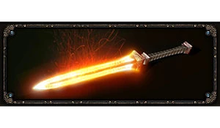
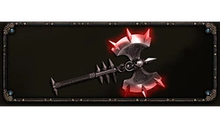
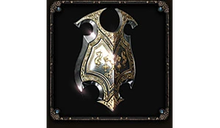
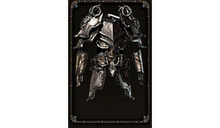
KnightFight Categories
| Section | What It Covers |
|---|---|
| Equipment | Weapons, armour, jewellery and soul stones: what is sold, what it costs, and what it does to a knight's numbers. |
| Attributes | The five trained attributes, the alignment axis they sit alongside, and the combat potential figure that summarises them. |
| Progression | Levels, experience, and the skill points that decide which equipment the merchant will sell. |
| Combat | Attacking, being attacked, the hour of protection between the two, and the separate international battle server. |
| Economy | The two currencies, the three places that take them, and the two ways of earning them. |
| Guilds | Founding a guild, the castle that sets its size, and the seven-day wars it can declare. |
| World | The estate a knight lives in and the altar inside it. |
| Achievements | Medals, and the highscore tables they are won from. |
| Calculator | Weapon damage, armour absorption, training costs and the experience each level asks for, on the game's own formulas. |