
Fighting
| Fighting | |
|---|---|
| Same opponent | Once every 12 hours |
| Protection after a fight | 60 minutes |
| Different attackers | No limit |
| Search by name | 1 gold |
| Experience penalty from | 6 levels below the attacker |
Attacking other knights is the heart of KnightFight, a game built around the struggle between good and evil. A fight is started from the combat menu and ends in a battle report. A premium account can skip straight to that report; without premium, the fight animates for five seconds first.
Losing costs gold, so the two limits on being attacked matter more than anything else. One opponent may attack a knight only once every twelve hours, and any fight at all, won or lost, puts the knight behind the hour protection that follows it.
Finding opponents
An opponent is found by name or by level. The name search costs one gold per search and only works when the name is already known.
The level filters depend on the account. Without premium there are two: a standard search, and a search limited to opponents of the same level or stronger. Premium replaces them with greater or equal, less or equal, exact, and a range from one level to another, and adds a good or evil alignment filter. Since the only named filter without premium points upwards, players without it usually pick a smaller opponent off the highscore list and pay to search for that name.
Attack limits
A won challenge carries off 5 to 10 per cent of the loser's gold. There is no cap on how many different players may attack a character; the limit is per opponent, at one attack every twelve hours. Striking first buys no relief, though. The knight who was attacked may hit back once the attacker's hour of protection runs out, and only after that counterattack does the twelve hour wait apply in return. The battlefield has limits of its own.
Under the game rules, attacking the same player again and again is ordinary play rather than harassment, which §12 deals with as a matter of private messages. Attacking the same opponent several times at once, however, breaches §5.
Attacking lower levels
In fights, experience only comes from opponents at the same level or higher. From six levels below the attacker a point is deducted instead, and the deduction grows with the gap. Above level 50 the allowance before the penalty starts widens with the attacker's own level, up to a maximum of ten. Both formulas are set out under levelling. A fight picked purely to start the hour of cover still does that job; it simply costs experience instead of earning any.
Combat rounds
A fight runs in rounds, and stamina decides how many of them a knight can last. The challenger always strikes first.
Each round turns on two rolls. The first decides whether the blow lands or is parried, weighted by fighting ability and parry. Only if it lands does the second roll matter: damage against the defender's absorption, with the difference coming off the defender's health, and nothing at all if absorption comes out ahead.
A knight whose health drops below 10 flees automatically, and fleeing counts as a loss. Otherwise the one who dealt the most damage wins. Fewer rounds therefore mean fewer chances to land a good hit, but also less damage taken in total.
Elemental damage from a soul stone is added to the damage range and cancelled element by element by the defender's amulet. A weapon with two points of ice against an amulet that resists one point of ice adds one point, not two, and elemental damage never drops below zero.
KnightFight Calculator
Four things the game works out behind the screen, on the same arithmetic it uses itself: what a weapon hits for in your hands, what your armour turns aside, what the next point of a skill costs at the merchant, and what the next level asks of you. Name an item and its numbers drop in, or drag a slider, or type a value straight into the box beside it.
Equipment Categories
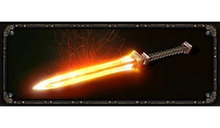
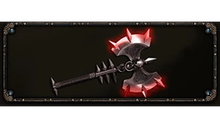
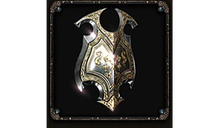
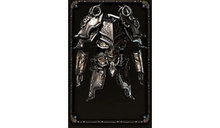
KnightFight Categories
| Section | What It Covers |
|---|---|
| Equipment | Weapons, armour, jewellery and soul stones: what is sold, what it costs, and what it does to a knight's numbers. |
| Attributes | The five trained attributes, the alignment axis they sit alongside, and the combat potential figure that summarises them. |
| Progression | Levels, experience, and the skill points that decide which equipment the merchant will sell. |
| Combat | Attacking, being attacked, the hour of protection between the two, and the separate international battle server. |
| Economy | The two currencies, the three places that take them, and the two ways of earning them. |
| Guilds | Founding a guild, the castle that sets its size, and the seven-day wars it can declare. |
| World | The estate a knight lives in and the altar inside it. |
| Achievements | Medals, and the highscore tables they are won from. |
| Abbreviations | The shorthand players use in chat and on the highscore |
| Game Principle | The knight, the oath, and what the game asks of a player |
| Premium Account | What paying changes, feature by feature |


