
KnightFight
| KnightFight | |
|---|---|
 | |
| Publisher | RedMoon Studios |
| Format | Browser game, player against player |
| Central axis | Alignment, good against evil |
| Equipment | Weapons, shields, armour, jewellery, soul stones |
| Account portal | moonID |
KnightFight is a browser game published by RedMoon Studios and built on one old quarrel: good against evil. Each player leads a knight into battle against knights run by other players. Equipment comes from the merchant and the bazaar, and a won attack carries off part of the loser's gold.
Gameplay
The game describes itself as 100 per cent PvP, 75 per cent MMO and 75 per cent RPG. Fighting other players sits at the centre of everything. A new knight has no beginner protection and can be attacked shortly after the account is created.
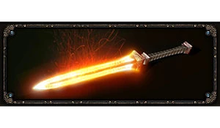
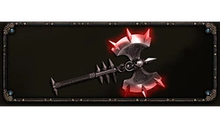
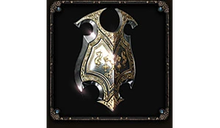
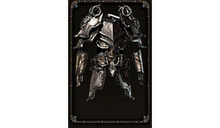
A knight fights with one of many one-handed weapons and a shield, or with a heavy two-hander. Both kinds come as swords and as axes. The blacksmith hardens a weapon and raises its damage with magic soul stones. Rings and amulets improve the attributes directly. With the right mix of skills and equipment, a knight can withstand even deadly attacks.
The avatar system offers a wide choice, from hairstyles to scars and jewellery. Each player can also design a crest and a character picture.
The loop
The core loop is short. Gold pays for training the five attributes and for better gear. A fight, whatever its result, buys an hour in which nobody can attack the knight. Missions fill that hour, and tavern work takes over when the purse runs dry. The rotations built on this rhythm are set out under hour protection.
Choosing a side
Nobody picks a banner when signing up. Whether a knight ends up with the Knights of Light or the Dark Hordes depends on how they behave, and alignment is the figure that keeps score. The story behind the two sides is told in the game principle section below. KnightFight was voted German Browser Game of the Year, and the game has been developed further ever since.
The career runs from a simple squire to the peak of a guild career, as a warlord over the Dark Hordes or a warrior of light. A knight can fight alone or alongside the members of a guild. Massive guild wars sit next to the lone duels.
Where the Rest of the Game Is
The details are spread across the categories. Attributes holds the five trained values, alignment and combat potential. Progression covers levels, skill points, and the weapon and armour skills that decide what the shops will sell. Equipment holds the item categories. Combat covers attacking, protection, missions, sitting, the international battlefield that opens at level 10, and the reports and rankings that all of this produces.
Economy holds the two currencies and everything that moves them: the merchant's fixed shelf, the bazaar's rotating one, the tavern's job board and the blacksmith who sharpens weapons and sets soul stones into them. Guilds covers founding a guild from level 5 and the 7-day wars guilds declare on each other. World holds the estate and the altar inside it, where gold buys back health. Achievements holds the highscore and the medals, one type of which is only ever awarded to characters the game runs itself. Player shorthand is collected in the abbreviations section below.
Battle Server
The international battle server is the step up for a knight who feels ready. It brings together the elite fighters of every country server. Fights there pay experience points, a fair wage in gold and medals. All of these carry over to the home world, where they improve the knight and show rivals what it has achieved.
Game Principle
Every login opens the knight's status page. It shows the character's figures and, next to them, a referral link that belongs to that character alone. Duels with other knights are decided by those figures and by the equipment worn, and the status page is where both can be checked.
The oath
In the game's story, knights served the king for glory, honour and justice, and that honour made them Knights of Light. Those who forgot their oath and filled their treasure chambers through robbery became the Dark Hordes. A new player takes the same oath and chooses between the same two paths: fighting for fame, honour and justice, or living off raids and immoral missions. Alignment keeps the score.
Referral link
The link is meant to leave the game: sent to friends, built into a homepage or used as a forum signature. It pays out in four ways.
A click alone brings in 1 to 3 gold. If the visitor registers, the new knight becomes the referrer's recruit, and the referrer receives 25 per cent of the gold the recruit's own link earns. When the recruit reaches level 3, the referrer collects 250 gold and an experience point; at level 10, 100 gems and another point. That last payment carries the real weight, since 100 gems is a fifth of a 30-day premium term, earned without paying anything. Faking accounts through a referral link gets every account involved deleted.
The profile settings control the link. A switch turns the advertising link on and off. A short text can also be set, and it is shown to anyone who clicks the link. The same formatting commands and rules apply to it as to the character description. The recruits a knight has brought in are listed under My friends.
Features
The feature list covers the rest of the game: hundreds of weapons, suits of armour, shields, rings and amulets at the merchant, rare items at the bazaar that the merchant never stocks, and soul stones set into a weapon at the blacksmith for magic damage. Three entries are about appearance: a crest of the player's own design, a character portrait built from hairstyles, scars and jewellery, and a custom name on a weapon, the last for premium accounts only.
The other entries are about growth. A knight trains attributes to stay a step ahead of enemies, and raises skills to use better one-handed and two-handed weapons, armour and shields. The estate can be expanded to show off power and influence. A guild can be founded, and its castle built into the strongest in the land. Tavern jobs let each player decide whether to be good or bad, and the bazaar takes equipment that is no longer needed. Over time the knight grows stronger and gains stamina and dexterity.
First steps
Because a new account has no protection, the usual opening is defensive. The first move is to train a few attributes, find a level 1 opponent and attack straight away, which starts the hour of cover that keeps the purse safe while the knight is away on a mission. Gold then goes into attributes until about level 4 and into a weapon after that.
The first real decision comes at level 10. A knight hunting gold does better levelling slowly and staying as strong as possible for that level, while one who wants to level faster and reach better equipment should consider the battlefield.
Abbreviations
KnightFight players write in shorthand, in the forum and in the game alike, and a fair amount of it makes little sense when read against the English words. Several letters are the initials of German words rather than English ones. Even RedMoon Studios, the studio behind the game, has its own entry: RMS.
The tavern shows how the two languages sit side by side. English players write TA, while German players write WH, from Wirtshaus. The password entry keeps its German spelling, Passwort, behind the letters PW.
Letters from German
S, N and U are the clearest case. They stand for Siege, Niederlagen and Unentschieden, meaning victories, defeats and draws, and the letters stayed German in the English game. TP works the same way for Trefferpunkte, hit points, and PW for Passwort. Because TP was never translated, the list carries both HP for health points and TP for hit points.
Translated letters
Other entries changed their letters along with the language. The German ES for Edelstein became Jw for jewels, and both mean gems. LE for Lebensenergie became HP, and KP for Kampfpotential became Cp, so combat potential goes by two different pairs of letters depending on who is typing.
Highscore columns
Four entries belong to the highscore: F for fights, then S, N and U. They are column headings in the highscore rather than words anyone writes in a sentence.
Two entries are easy to misread. Skill means an attribute such as strength or defence, which is a different thing from skill points. Low, or lowlevel, is the word high level players use for low level ones, and High is its opposite.
Game terms
The remaining game terms cover the tavern, the battlefield as BS, short for battle server, the safety fight that starts the hour protection, written SK, and the servers as S1, S2 and so on. PT is a leftover from the premium ticket, which is how premium was sold before jewels and MoonCoins replaced the old system; Mc is the shorthand for those coins. The last five entries are technical rather than game terms: antivirus software, a firewall, a false positive and two browsers.
| Abbreviation | Meaning |
|---|---|
| Jw | Jewels, meaning gems |
| EP(s) | Experience points |
| TA, WH | Tavern (WH from the German Wirtshaus) |
| High | Highlevel, a high level player |
| HS | Highscore |
| ID | User ID, which identifies the account |
| HP | Health points |
| Low/Lowlevel | What high level players call low level players |
| KF | KnightFight |
| Mc | MoonCoins, or MoonID Coins |
| F (in Highscore) | Fights |
| PT/Prem | Premium ticket, or premium user |
| PW/pw | Password (German Passwort) |
| RMS | RedMoon Studios |
| S (in Highscore) | Victories (German Siege) |
| N (in Highscore) | Defeats (German Niederlagen) |
| U (in Highscore) | Draws (German Unentschieden) |
| BS | Battle server, the battlefield |
| Cp | Combat potential (German KP) |
| S1, S2, ... | Server 1, Server 2 |
| SK/Save(-fight) | Safety fight |
| Skill | An attribute, such as strength or defence |
| TP | Hit points (German Trefferpunkte) |
| AV | Antivirus program |
| FW | Firewall |
| FP/fp | False positive |
| FX/FF | Firefox, followed by the browser version number |
| IE | Internet Explorer, followed by the browser version number |
Premium Account
KnightFight is free to play. Premium is an optional extra that helps pay for the servers, further development and support, and gives a set of conveniences in return. It runs for 10 or 30 days at a time and is bought by converting gems: 175 gems buy 10 days and 500 buy 30.
Everything premium offers comes down to time and convenience. None of it touches an attribute, a weapon or the way a fight is decided.
The two lines with weight
Mission time doubles, from 60 minutes a day to 120. With 10-minute blocks that means 12 mission runs instead of 6, and the rotation that keeps hour protection over them simply gets longer without changing shape.
The other is the combat lock during a mission, which drops to 5 minutes from the usual 15.
Convenience
Opponent search gains the level filters and the good or evil sort described under fighting, so a small target can be found directly instead of hunting for a name in the highscore list and paying the gold piece a name search costs. Battle reports show up inside other players' profiles, and the animated fight scene can be skipped at once. The profile display options also hold a switch, open only to premium accounts, that turns that scene off entirely.
Two naming rights come with it: the player name can be changed, and a weapon can be given its own name at the blacksmith. A premium player can change the avatar as well. A custom character picture is open to every account. Finally, tavern jobs pay 10 per cent above the advertised wage. That is well short of the 30 per cent from the tavern package, the other term the same gems can be converted into, at the same rates as premium time.
Buying Premium
Premium is bought through gems or MoonCoins. These replaced the old premium tickets, which each bought a fixed number of months. Now the gems are credited directly, and the player decides what to spend them on. MoonCoins can only be bought for an account connected to the MoonID portal.
The Premium section of the account explains which package is available through which payment method, step by step. Some payment methods add a small bonus to the number of gems. While premium is active, the game shows how many gems are left and how long premium still runs. Past purchases are listed under Premium for an unconnected account, or under Payment and then Purchases on the MoonID portal.
The profile settings hold a safety switch for paid currency. When it is on, an extra question appears before any gems or MoonCoins are spent.
Over time, the difference shows. A knight without premium often finds that some players pull ahead and stay there. Those players usually have premium, and the double mission time is the biggest reason.
The full comparison
The table sets the features side by side. The third column is the 3-day starter premium, which matches full premium on every line.
| Feature | Premium | Non-Premium | Starter Premium (3 days) |
|---|---|---|---|
| Mission time per day | 120 minutes | 60 minutes | 120 minutes |
| Advertising | None | In-game ad banner | None |
| Custom character picture | Yes | Yes | Yes |
| Combat lock during a mission | 5 minutes | 15 minutes | 5 minutes |
| Opponent search | By level and by good or evil | Standard only | By level and by good or evil |
| Battle reports in another player's profile | Shown | Not shown | Shown |
| Change player name | Yes | No | Yes |
| Give weapons individual names | Yes | No | Yes |
| Gold from tavern jobs | 10% more | As advertised | 10% more |
The five attributes, equipment, skill points and the way a fight is resolved work the same with or without premium. So do the hour of protection after a fight, the 12-hour wait before the same opponent may attack again, and the experience lost for attacking far below one's own level.
Premium time can also be won rather than bought: it is one of the prizes in the royal prize draw held at the end of every battlefield battle.
Equipment Categories
KnightFight Categories
| Section | What It Covers |
|---|---|
| Equipment | Weapons, armour, jewellery and soul stones: what is sold, what it costs, and what it does to a knight's numbers. |
| Attributes | The five trained attributes, the alignment axis they sit alongside, and the combat potential figure that summarises them. |
| Progression | Levels, experience, and the skill points that decide which equipment the merchant will sell. |
| Combat | Attacking, being attacked, the hour of protection between the two, and the separate international battle server. |
| Economy | The two currencies, the three places that take them, and the two ways of earning them. |
| Guilds | Founding a guild, the castle that sets its size, and the seven-day wars it can declare. |
| World | The estate a knight lives in and the altar inside it. |
| Achievements | Medals, and the highscore tables they are won from. |
| Calculator | Weapon damage, armour absorption, training costs and the experience each level asks for, on the game's own formulas. |